





















How AI Token Development Is Enabling New Business Models in DeFi and Beyond
Entrepreneurs, developers, and enterprises that understand and leverage this intersection of AI and tokenization will not only gain a competitive edge but also shape the trajectory of digital ecosystems for years to come.

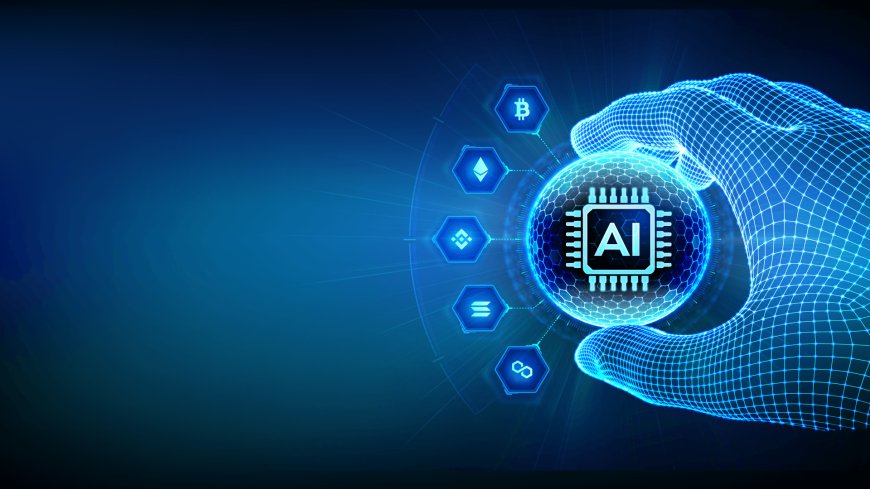
The fusion of artificial intelligence (AI) and blockchain technology is ushering in a new era of digital innovation. Nowhere is this more evident than in the rapidly evolving landscape of decentralized finance (DeFi). As the crypto ecosystem matures, developers and entrepreneurs are exploring how AI tokenscryptographic assets tied to AI functionalitiescan enable new business models that were previously inconceivable. These tokens are not just digital assets; they represent programmable access to machine learning models, autonomous agents, predictive analytics engines, and much more. This convergence is driving a shift in how services are delivered, monetized, and scaled in the decentralized world.
While DeFi was initially focused on replacing traditional financial services with decentralized alternatives, the introduction of AI token development is broadening the scope. AI tokens are empowering automated trading, dynamic risk management, decentralized autonomous organizations (DAOs), and entirely new value propositions in sectors like healthcare, supply chain, content creation, and the creator economy. In this blog, we explore how AI token development is reshaping business models in DeFi and extending its transformative impact well beyond the financial sector.
The Fundamentals of AI Token Development
At its core, AI token development refers to the process of creating blockchain-based tokens that are linked to artificial intelligence functions. These tokens often represent utility rights to AI services, access to data feeds, or participation in AI-powered ecosystems. The token acts as a gateway for users and developers to interact with AI models without needing to own or operate the underlying infrastructure.
Token standards such as ERC-20, ERC-721, and ERC-1155 can be used to develop AI tokens, depending on the intended use case. These tokens may be integrated with smart contracts that execute AI logic, reward structures for machine learning contributions, or decentralized data marketplaces where users sell and buy AI-processed insights. What makes AI tokens distinct is their ability to make intelligent decisions or predictions autonomously within the framework of a blockchain-based application.
This form of development typically involves partnerships between AI engineers, data scientists, blockchain developers, and token economists. The resulting token serves not only as a transactional unit but also as a key to unlock new levels of automation, personalization, and predictive analytics across Web3 platforms.
Unlocking Automation in DeFi with AI Tokens
DeFi platforms are increasingly turning to AI tokens to supercharge automation and reduce human intervention. Traditional DeFi relies on smart contracts for decentralized lending, borrowing, yield farming, and liquidity provision. However, the decision-making processes within these contracts are often rigid and rule-based. AI integration introduces a layer of intelligent behavior that allows DeFi platforms to respond dynamically to market conditions.
For instance, AI tokens can be tied to trading bots that analyze market sentiment, news feeds, and historical trends in real-time to adjust portfolio allocations or execute trades. These bots may require users to stake AI tokens to gain access to premium algorithmic strategies. Similarly, AI can optimize yield farming by forecasting APR fluctuations and reallocating funds across protocols to maximize returns, all governed by token-based access and incentives.
Risk management is another area where AI tokens are playing a transformative role. Algorithms powered by AI can monitor loan-to-value ratios, collateral quality, and macroeconomic signals to adjust interest rates or trigger liquidation events before market downturns. This proactive approach minimizes systemic risks and enhances trust in the decentralized financial system.
Enabling AI-as-a-Service with Tokenized Access
One of the most powerful applications of AI token development is the emergence of decentralized AI-as-a-Service (AIaaS) platforms. These platforms tokenize access to AI models, allowing businesses and developers to pay for inference, training, or API usage with native tokens. The token economy thus becomes the backbone of a permissionless marketplace where AI services can be discovered, accessed, and monetized.
This is particularly disruptive for enterprises and startups that need affordable, scalable AI capabilities but do not want to build models from scratch. Instead of paying centralized providers with fiat currency, users can stake or spend AI tokens to interact with decentralized AI protocols. The cost structure becomes more transparent and market-driven, aligning supply and demand in real time.
Moreover, contributors who build or refine AI models can be rewarded in tokens through decentralized incentive mechanisms. This opens the door to collaborative model training frameworks where data providers, model trainers, and validators are all compensated fairly via smart contracts, eliminating intermediaries and reducing friction in the AI innovation lifecycle.
Redefining DAOs and On-Chain Governance with AI
DAOs have become a cornerstone of decentralized ecosystems, enabling community-driven decision-making. However, human governance often leads to inefficiencies, biases, and slow reaction times. AI token development is enabling a new wave of intelligent DAOs that combine community input with AI-powered decision support systems.
In this new paradigm, AI tokens can represent voting power not only based on ownership but also on behavioral and reputational data. AI agents can analyze proposals, simulate outcomes, and recommend optimal governance paths, improving the quality and speed of decisions. Participants may use tokens to delegate decisions to AI agents that align with their preferences or values.
Beyond simple voting, these intelligent DAOs can also manage treasury allocations, oversee protocol upgrades, and even regulate community behavior by identifying patterns of malicious activity. The integration of AI tokens into DAO structures is fundamentally altering how decentralized communities operate, enabling more efficient, scalable, and responsive governance systems.
AI Tokenization in Healthcare, Supply Chain, and Beyond
While DeFi is the proving ground for AI token development, the real disruption lies in its application across other industries. In healthcare, AI tokens can grant secure and auditable access to anonymized medical data for training diagnostic models. Patients might earn tokens for contributing data, and researchers can use those tokens to access AI tools that help with early disease detection, drug discovery, or personalized treatment planning.
In the supply chain sector, AI tokens can be used to access predictive logistics models that optimize routes, forecast delays, or detect fraud. Sensors on IoT devices can feed data to decentralized AI networks, and tokens can reward stakeholders who maintain data integrity or operate validation nodes.
Content creation and the creator economy are also benefiting from AI token models. Writers, artists, and developers can use AI tools for ideation, editing, and distribution, all paid for with tokens that circulate within a closed-loop creator ecosystem. Tokens can also incentivize remixing, curation, and community participation, fostering a more interactive and decentralized cultural economy.
Monetizing AI Models Through Token Staking and Licensing
Monetization remains one of the biggest challenges in AI deployment. AI token development provides a robust solution by enabling token staking and decentralized licensing models. Developers of AI models can require users to stake tokens in order to access the models outputs. The more valuable or accurate the model, the higher the staking requirement, thus creating a tiered access model driven by token economics.
Additionally, models can be licensed in a decentralized manner. Through smart contracts, token holders can grant access to their proprietary models for a fee or revenue share, without ever giving up direct control. These licensing agreements are enforced on-chain and often time-bound, meaning access rights can expire automatically, reducing the risk of abuse or piracy.
This token-driven monetization approach turns AI into a permissionless, composable service layer on the internetone that is secure, programmable, and scalable.
Fueling the Growth of AI Infrastructure and Compute Networks
A crucial component of AI development is access to compute power. AI token development is now enabling decentralized AI compute marketplaces where users pay tokens to rent GPU cycles, storage, or bandwidth. These platforms, such as those built on the DePIN (Decentralized Physical Infrastructure Network) model, use tokens to coordinate the supply and demand of computing resources.
Participants who contribute compute power are rewarded with AI tokens, while developers use these tokens to train or deploy their models on the network. This decentralized approach democratizes AI infrastructure, lowers costs, and reduces reliance on cloud giants. It also allows for greater privacy and control, since users can select nodes based on jurisdictional or compliance requirements.
The end result is an open, token-driven infrastructure layer that supports scalable, censorship-resistant AI model development.
Expanding Financial Inclusion and Accessibility
One of the often-overlooked benefits of AI token development is its potential to drive financial inclusion. By lowering the cost of intelligent financial services and removing intermediaries, AI-powered DeFi platforms make advanced tools accessible to users in underbanked or economically marginalized regions.
Through mobile wallets and AI tokens, individuals can access micro-lending, portfolio management, credit scoring, and insurance products tailored to their unique data profiles. These models use alternative data sourceslike mobile usage, transaction behavior, or geolocationto make more accurate predictions, all governed by decentralized algorithms and executed via AI tokens.
This kind of accessibility creates a more inclusive global financial system, where participation is based not on geography or credit history, but on transparent, algorithmic decision-making.
Conclusion:
AI token development is not merely a trendit represents a foundational shift in how intelligence is created, shared, and monetized on the blockchain. By merging AI capabilities with token-based incentives, developers are crafting self-improving, decentralized ecosystems that transcend traditional business models. In DeFi, these tokens are making platforms more adaptive and user-friendly. In other sectors, they are giving rise to new economies built on intelligent automation, collaborative data models, and permissionless innovation.
As the demand for scalable AI solutions grows, AI tokens will continue to act as both fuel and framework for the next generation of decentralized applications. From dynamic trading bots and DAO governance to healthcare diagnostics and decentralized compute grids, AI token development is the cornerstone of a smarter, more autonomous Web3 future.